Money is the capacity to consume, to use or use up things. And we do need to consume and so produce to live. Producing things for consumption and developing our technology to do so has brought tremendous advances to humanity.
Money is a wonderful tool for measuring production and consumption of things. Much better than trying to barter or bargain--since I am terrible at that; and I am getting too old to carry things to market. A unit of money is simply a piece of paper or an accounting entry that shows I owe or am owed something I need, want or value. The money system works because we all together through our governments give assurance for the note or accounting credit or debit.
Financial Capital is measured by the amount of money one has or the assets that can be traded or accounted for by money. So our condo in this market is worth about $250K. I owe $125k on my mortgage. Unless the condo appreciates or depreciates, I can count on $125k to use to buy things if I sell our condo. However, we have to live somewhere and intend to keep our condo. So that $125k doesn't really mean that much. I'm just glad I don't owe the bank more. I am also glad that I can avoid paying some taxes on my other retirement income because I can declare the interest on my mortgage payment. My bank is glad even more because then I wouldn't be giving them money.
Some of us seem to need or want more than others. That's okay. I needed lots more financial capital when I was going to school or raising my children. I need and want a lot less now. I need and want transportation, nourishment, reading, writing, and education (primarily through libraries and internet), interacting with my family and friends and knowing they are and will be safe and happy, being of some use to others, running and walking on trails and in parks, nice weather, breathing clean air, drinking clean water, eating nourishing food, enjoying good health and health care, and some culture and fun (primarily through museums, institutes, schools, theaters, cafes and pubs). I do want to continue to explore through travel but mainly locally. So these are what I value, most of which cannot be measured in money. However, I realize that the goods and services that provide these are measured in money.
I do not measure my worth or success in terms of money, my capacity to buy and use (up) things. And I don't think most people do. So I am not at all concerned about gaining more or fearful about losing money. I think that makes me free in a very basic sense; i.e. in the sense that I think all people should be free from fear for or want of basic needs of life and pursuit of community and public happiness.
So I want an economy that is not based on financial capital. I do not want an economy that functions simply by increasing money or moving money around (usually up, to people who have the most) without fostering real capital--like a casino does, like Wall Street does, like housing speculation does, like buying, selling, corporatizing businesses does, or like commodifying and depleting earth resources does. I'm all for economic growth but not the kind that the big banks, the stock brokers, the financial fund operators, and the transnational (i.e. non-local) corporations mean.
I'm all for capitalism. But the capitals in which I am most interested are human, communal, earth, spiritual, educational, cultural capitals. This are the capitals I want to support, enhance, and protect. A capitalism that does not grow these capitals is a sham, unsustainable capitalism that will ultimately destroy itself by destroying its very life supporting system.
And this is just what we are seeing in earth change, fragmenting communities, fear and terror, non-renewable energy depletion, and plutocracy with loss of political engagement. By focusing on profit, by understanding profit as an increase in money not capital, by subordinating all capitals to financial growth, by measuring success of nations, cities, and persons by the accumulation of the private, individual ability to consume, we are on an unsustainable path as a species.
And I think that most of us sense this but react to it in different ways, some by building more solid walls, by burying precious metals, by buying weapons, by trying to take things away from others, by holding on to destructive dogmas. A better way is to redesign our economy into a sustainable capitalism.
Next: How
Saturday, November 17, 2012


Defining Economy
Fiscal cliff crisis talk: Grand Bargain or Grand Betrayal? Austerity to cut the deficit or stimulus to create jobs? Give investors more to invest in what they think they can make some money or take some money from them to invest in what we think the public needs to invest? Everybody says let's just do what is best for the American economy. But which and whose economy? And what do we mean by "economy" anyway?
Two definitions from the Oxford dictionary:
1. the state of a country or region in terms of the production and consumption of goods and services and the supply of money. 2. careful management of available resources
But it is helpful to consider the origin of the concept from the same dictionary.
Late 15th century (in the sense 'management of material resources'): from French économie, or via Latin from Greek oikonomia 'household management', based on oikos 'house' + nemein 'manage'.
The household or home is the realm of sustaining life (Arendt). Oikos is also the land and the earth, our first and basic home, the origin and sustainer of all life. And so the word "ecology" is from the same root. One of the tragedies of industrial modernity is the separation of economy from ecology; and thus the loss of the sense of a universal ecosystem.
Economy is distinguished from the polis or the civis--from which we get the words politics and civilization. In the city or state, free citizens step out of their private households to join with others in speech, decision, and action as equals to create and conduct the affairs of the commons. This includes the protection of private households and personal life and happiness (economy/ecology): walls (laws) for defense of earth's resources and personal property, market places, safety nets, disaster centers, routes and centers of commerce, and police to protect them. But action in the commons includes so much more than protection of personal life, by making space and time for public happiness: learning centers (universities), entertainment centers (arenas), cultural centers (theaters, museums, institutes, temples), parks and recreation centers, government centers, and above all centers for free speech and action.
Culture/religion belongs to both realms. There are household gods, shrines, and rituals that give meaning to life. There are public gods, shrines, and rituals that give meaning to common action. New thinkers question the gods and rituals, especially in the public realm, at considerable risk as Jeremiah, Socrates, Jesus, Giordano di Fiori, Galileo, Ghandi, and Martin Luther King demonstrate.
Economy, therefore, cannot be understood without its relationship to ecology, to the commons or public realm, and to culture or symbols of meaning.
But that is precisely what left, right, and center in the present conversation on the economy are trying to do. They neglect the intimate interaction of the systems of economy, ecology, politics, and culture. They use the definition of the Oxford dictionary and as Korten points out, identify resources with money and wealth with the supply of money instead of using money as simply an accounting tool for true wealth.
Next: Sustainable capitalism.
Thursday, November 15, 2012
The Story of Economy
I had lots of insights from the Contemplative Alliance Symposium in which I participated a couple of days ago. I will channel some of my reflections here and then gather them into an article.
David Korten (Agenda for a New Economy, The Great Turning) presented the importance of changing our central narrative or creation story if we are to foster resilience and integration in our economic, ecological, and (I would add) political systems. And with this change of narrative comes a new metaphor for God.
We need to move past the agricultural age tribal story of a Distant Patriarch or (I would add) Nourishing Matriarch and past the industrial age story of classical science of a Starter God who makes and switches on the machine, maybe oiling it from time to time. Korten articulates the new image for God as Integral Spirit. This is a Teilhardian image of Consciousness present, emerging, and guiding all elements and systems of the universe. It is also Wendall Barry's notion of Nature in the fullness of Being and Becoming. And it is the notion of Reality as portrayed by the new science and contemporary art appearing through rational inquiry (scientific method) and phenomenology of consciousness (artistic and religious imagination).
This story and image some of the participants pointed out is contained in and vies (usually unsuccessfully) in the scriptures and rituals of most of our religious traditions, e.g. the Cosmic Christ Spirit of Christianty, the Shekhinah of Judaism, the ruh of Sufi Islam, the Sunyatta or Annata of Buddhism.
Korten, citing some Pew Foundation studies, indicated that over 60% of the people have abandoned the patriarchal God of the fundamentalist Protestant, Catholic, Jewish, and Muslim hierarchy but need avenues, language, and institutions to express the emerging imagination and narrative and that is a contemplative imperative. Certainly this was the vocation that Trappist monk Thomas Merton took seriously (and also with great humor) as my friend Bob Toth points out.
The old, angry white, usually Christian, men and their women in America are trapped in their belief systems, their limited images, by their own institutions even against their own interests. That is why they were so shocked by the last presidential election--much more than I would have been if it had gone differently (as I suspected it might). They will die out, as will I, hopefully leaving room for the young to bring in the new imagination to support the new economy, ecology, and polity which belongs to no one nation, party, or ideology.
Listening to all this I penned the following in my notes:
God, you do not love us. You are the Love we have for one another and the earth.
You do not tell us things. You are the Word we speak to power with each other.
You do not answer our prayers. You are the Solution emerging through our contemplation in action.
You do not dictate truths to us. You are the Truth we discover in our cooperative inquiry.
You do not judge us. You are the Good we intend in all creation.
You are not a person or thing. You are the personal, collective Consciousness that we become in our union with our selves, each other, and the universe.
Next: Redefining Economy.
Monday, November 12, 2012
Three Issues and the Ethic of Integrity and Resilience
In yesterday's Blog, I identified three major issues hardly, if at all, mentioned in the election campaign, which I think are paramount, relate ton one another, and include all other issues including those that were mentioned in the campaign. I also indicated the underlying ethic behind these issues which I think is a choice that embodies both threat and opportunity for humanity.
Earlier in my examination of the ethic of integrity, I spoke about the choice between faith and belief, between the me/mine mentality and the together mentality, the holding in tension both personal self and communal other, past expressions and imagining the future, relationality over both absolutism and relativism, living and acting in the murkiness of changing reality.
Recently I read Andrew Zolli's book Resilience: Why Things Bounce Back. He defines resilience as:
continuity and recovery in the face of rapid change.
A good working definition, particularly in an urban planning context, is: the ability to maintain core purpose, with integrity, under the widest variety of circumstances. More broadly, it’s the ability to recover, persist or even thrive amid disruption.
Among other things, resilient systems sense and respond to their own state and the state of the world around them, compensate or dynamically reorganize themselves in the face of novel shocks, decouple themselves from other fragile systems when necessary, fail gracefully, and have strong local self-sufficiency.
But we shouldn’t get too hung up on the specific language. Any definition will only ever be a first approximation, because there are countless kinds of systems, countless ways for them to be more or less resilient, and countless things for them to be resilient to.
Therefore resilience implies integrity and I think that integrity implies resilience and indeed is the primary path to resilience. I will reflect much more on this.
Here for my own contemplation is a mind map of the three issues and the Ethic of Integrity and Resilience:

Or click here.
Sunday, November 11, 2012
After the Election
I've been reading lots of postmortems and postvivas.
On the R side: the range is between a sensible Michael Gerson, a true conservative in the Edmund Burke and John Kekes tradition, and a grumpy Charles Krautheimer in the angry right white male populist, nativist tradition. Gerson recommends that the GOP take responsibility, learn, include, and promote real republicanism. Krautheimer recommends holding the present path (except maybe giving in a bit to the Latinos), while blaming the moral fiber of the nation, the takers over the makers, or anyone else who doesn't see the world the way he does.
On the D side: Krugman is recommending that Liberals hold tight and don't make a deal on the fiscal "cliff"; others are pushing an expanded social issue agenda. Single issue organizations are rightly pushing their agenda in immigration reform, limiting the fossil fuel industry, expanded gay and women's rights, and jobs through public infrastructure spending especially smart growth and public transportation. (Whoops! This just in. Santorum blames the "homosexuals.")
But I am not so interested in what the Parties or the President need to do. I want to consider what I want to do with others in the aftermath of this election.
As I have confessed before, I am a socialist in economics (i.e. for social justice), a libertarian in culture (i.e. with so-called social issues), a conservative in politics (e.g. for true republicanism). As such I will support resources for the working poor to assist them achieve greater equity and political power. I will strongly support the expansion of the rights and true wealth of people who have been left behind in our system. I will support scientific inquiry and tolerance; and I will fight religious dogmatism and bigotry. I will also support self-organizing communities for achieving understanding, for creating or reorganizing their own institutions, and for having collective power in relation to the monied people and institutions who are now shaping their environment and future.
I think that the biggest issues that face our humanity were not much discussed in the recent electoral campaign.
They are:
1. The widening gap between the rich and everyone else with the consequent domination of the superrich and their institutions. This means much more than tax reform or debt reduction but re-imagining the fundamental vision, mission, and structure of our national and global economy and its institutions.
2. The state of the planet with the consequent survival of the human species. This means more than preventing or adapting to global warming but re-imagining the fundamental vision, mission, and structure of technological progress in relation to the condition and future of humanity.
3. The development of cosmopolis and the possible loss of freedom and power of communities, nations, and/or the whole of humanity. This means understanding and reviewing the structures that will prevent domination, war, and terror.
Each of these issues imply the others. Underlying them is the vision, mission, and ethical structure or integrity of humankind: the notions of justice, of equity, of power, and of freedom.
So what do I intend to do?
1. I will continue to work with my church, nonprofit housing corporation, and metro-wide community organization to advance affordable housing, community organization, and development in Columbia Heights and DC. This keeps me grounded in a diverse neighborhood community with many others of similar values and interests.
2. I will explore developing new or working with existing NGOs that will educate, organize, and advocate in relation to these three interrelated issues.
Click here for a Mind Map of the three issues and see next blog.
On the R side: the range is between a sensible Michael Gerson, a true conservative in the Edmund Burke and John Kekes tradition, and a grumpy Charles Krautheimer in the angry right white male populist, nativist tradition. Gerson recommends that the GOP take responsibility, learn, include, and promote real republicanism. Krautheimer recommends holding the present path (except maybe giving in a bit to the Latinos), while blaming the moral fiber of the nation, the takers over the makers, or anyone else who doesn't see the world the way he does.
On the D side: Krugman is recommending that Liberals hold tight and don't make a deal on the fiscal "cliff"; others are pushing an expanded social issue agenda. Single issue organizations are rightly pushing their agenda in immigration reform, limiting the fossil fuel industry, expanded gay and women's rights, and jobs through public infrastructure spending especially smart growth and public transportation. (Whoops! This just in. Santorum blames the "homosexuals.")
But I am not so interested in what the Parties or the President need to do. I want to consider what I want to do with others in the aftermath of this election.
As I have confessed before, I am a socialist in economics (i.e. for social justice), a libertarian in culture (i.e. with so-called social issues), a conservative in politics (e.g. for true republicanism). As such I will support resources for the working poor to assist them achieve greater equity and political power. I will strongly support the expansion of the rights and true wealth of people who have been left behind in our system. I will support scientific inquiry and tolerance; and I will fight religious dogmatism and bigotry. I will also support self-organizing communities for achieving understanding, for creating or reorganizing their own institutions, and for having collective power in relation to the monied people and institutions who are now shaping their environment and future.
I think that the biggest issues that face our humanity were not much discussed in the recent electoral campaign.
They are:
1. The widening gap between the rich and everyone else with the consequent domination of the superrich and their institutions. This means much more than tax reform or debt reduction but re-imagining the fundamental vision, mission, and structure of our national and global economy and its institutions.
2. The state of the planet with the consequent survival of the human species. This means more than preventing or adapting to global warming but re-imagining the fundamental vision, mission, and structure of technological progress in relation to the condition and future of humanity.
3. The development of cosmopolis and the possible loss of freedom and power of communities, nations, and/or the whole of humanity. This means understanding and reviewing the structures that will prevent domination, war, and terror.
Each of these issues imply the others. Underlying them is the vision, mission, and ethical structure or integrity of humankind: the notions of justice, of equity, of power, and of freedom.
So what do I intend to do?
1. I will continue to work with my church, nonprofit housing corporation, and metro-wide community organization to advance affordable housing, community organization, and development in Columbia Heights and DC. This keeps me grounded in a diverse neighborhood community with many others of similar values and interests.
2. I will explore developing new or working with existing NGOs that will educate, organize, and advocate in relation to these three interrelated issues.
- I will continue to read, discuss, contemplate, and write on these issues and their underlying ethic.
- I will meet with leaders in public and private organizations to identify gaps, pressure points, and a place where a committed group of leaders might best make a difference.
- Working with colleagues, I will organize and develop a thoughtful response through an organization based in DC but involving people and organizations with as much reach as possible.
Click here for a Mind Map of the three issues and see next blog.
Saturday, November 10, 2012

All for Obama
Guest Blogger Bernie:
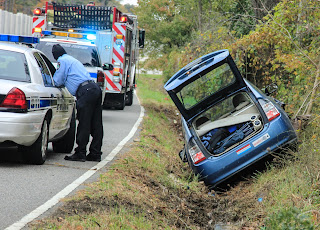
Greetings! Thought I would let you know about the campaigning we did for the President! We spent a day knocking on doors in Alexandria, then a full day in Spotsylvania (no kidding!!) and then a trip down to Newport News, VA. Left on Sunday morning and home on Wednesday, in a rented car.
Our assignments in Newport News put us into a threesome with Nema Taghavi. The campaign staff told us that if we could get out the vote in this area, we would win Virginia and it would have been next to impossible for Romney to win…so knew we had a mission! We were the three musketeers and we worked hard and enjoyed the team work we did….We were assigned to very poor, mostly African American communities. For the first two days we asked if they were going to vote and if they were supporting the President and when they were planning to vote and if they needed a ride.
Then on Tuesday morning we were off just to ask if they voted or when they were going and if they needed a ride or left a sticky note reminding them to go vote.
This was an amazing ground campaign and we were so proud to do this. Then about an hour before we would have been done, I guess I glanced at the GPS to see just where we would be turning when the car went into the ditch and was totaled…so I was told by fire, towing and police. Several people stopped to see what they could do…we had fire, ambulance and police…what a site we were… Tree on the right stopped us, my window blew out and car a mess but fortunately Nema, Rollie and I are good. Police said if I had been going fast the tree would have sent us flying…thanks god I was not…Nema went to the hospital for a few hours for a couple of CTs and xrays…but fortunately had no broken bones and was released. Thank god for drugs tho!

Rollie’s brother Bill, came to pick us up and became our hero for the day! We spent the night with Bill and Marcia. Then Rollie got a car and we picked up Nema and Rollie drove us home. For sure, this election will be one we will remember!!!!
And so I am looking for a new vehicle…I am thinking of a used military tank…..that ought to do it! Anyway, our efforts were worth every minute and a car! Take care….hugs to you all! Bernie
do see the pictures and Rollie’s note!
Wednesday, October 31, 2012
Does History Tilt Progressive?
I would like to think so. When I took Western History in high school and college (Greece/Rome/Mid-East to Europe and liberated territories/colonies), I thought that the march of history was to the left, e.g. from Tory to Whig to Republican. Hegel, as wonderfully analyzed by Francis Fukuyama, saw the End of History in liberal democracy. Marx picked up the "science" of history as moving from aristocracy to bourgeoisie to proletariats. But dictatorial fascism and bolshevism and, now, the new global plutocratic oligarchy seems to have put the kibosh on the seeming inevitable progressive unfolding of humanity.
"Progress is our most important product" is a great slogan. But not if it is measured in consumable wealth or money rather than in human happiness that comes with integration with one's self, neighbors, community, nature, and the universe.
The question asks itself in this presidential election which is shaping up as a choice. Between a return to the past, e.g. our image of the greatest WWII victorious generation of the mid 20th century or "the way we never were" as one author puts it. Or a new racially, sexually, ethnically, socially, economically diverse but integrated, in creative class communities, through advanced technology, solving all our problems intelligently through science or "the way we never will be" as a new author might put it.
Clearly the Romney campaign is most appealing to white men and their women and older folk who see Obama taking the country down the road to perdition. While Obama is appealing to youth, liberated women, intellectuals, Latinos and African Americans who are setting new standards of morality. (See the article in the WP today: "Electing the Future or the Past").
Demographics may now seem to be on the side of the Democratic Party--no matter who wins this election. Republicans by identifying themselves more with the regressive white South and with white working men who fear the loss of their once dominant position and their income are courting disaster in the long run. But that could change. Look at Clarence Thomas and Marco Rubio and Herman Cain. Look at how urban Catholics, once the mainstay of the Democratic party, moved to the suburbs and became Republican. Maybe Republicans will come to their senses and work for a McCain/Bush/Obama comprehensive immigration reform which would bring in many more Latinos.
As I have said earlier, it's not the Parties. I trust I would have been a strong supporter of Republicans under Abe Lincoln, Bob Taft, Teddy Roosevelt, and even Ike--attacking slavery, robber barons, and the military-industrial complex. Both Parties seem trapped by economic concerns and need strong challenges as to their notion of wealth, freedom, public, and humanity. Both Parties are now dominated by superstar plutocrats whose policies and methods undermine the republic. (You can tell that I am reading Plutocrats by Chrystia Freeland.)
Back to the question. Is history on a progressive or regressive track? I think that the tilt of history question is somewhat like the "fundamental option" or "Paschal's Wager" (which we discussed earlier). It's our choice that makes it so.
Tuesday, October 30, 2012
Has the Singularity Passed Us By?
Joe just sent be an interesting article that questions whether we have already reached the Singularity (as portrayed by Ray Kurzweil in his book). In the last 50 or so years, technology, following Moore's Law, has raced ahead of our ability to comprehend it all.We are so plugged in to electronic information networks and them into us that instead of waiting for some future moment, we might indeed say that the Singularity is already here.
Kurzweil is predicting, however, that through bioengineering human life will be extended indefinitely. Also brains can be more intimately connected to expanding computer capacity so that, not just information, but knowledge will expand exponentially. We will finally have consumed the fruit of the primordial tree and be as gods.
As I have reflected earlier in my series on "new ethics," when we achieve virtual immortality and omniscience I think that means an evolution into an entirely new species.* There may still be some of our existing species still around, e.g. those who refuse to be plugged in. Think of the "luddites" today who do not use smart phones, social networks, ebooks and iUniversity courses, GPS, and those who do not accept science but turn to mythology for their truths. But they will be as the neanderthals were when living with, and even having sex with, homo sapiens.
I am not sure this will be a good event. But then I am judging the good based on my understanding of human, i.e. homo sapiens sapiens, existence and nature.
But that is why it is important to think this step out. Human evolution contains much of what was achieved through earlier mammalian and hominid adaptation to a changing environment, including the adaptation to change itself through creative symbolic interaction. If we are indeed evolving a new species, we have a say collectively as to what we want it to be. If we want that say.
One very big question regarding the Singularity is the value of death.
Many biological anthropologists have speculated that homo sapiens began to know, that is, reflect on death about 200,000 years ago as a byproduct of symbolic communication. Death rituals and myth may be the first instances of art and culture. Religion is closely tied to the awareness of death as something to be avoided or used. Terrence Deacon and others have linked tool using and the eating of meat to social groupings, to male and female responsibility for children in groups, to symbolic communication, to self representation and awareness, to awareness of death, to religion and culture, to arts and sciences and technology development.
Death, then, is related to culture and to legacy in children, in social contribution, in the future of the species. Death is also related to new birth and creativity.
Indeed Gulliver's travel to Luddnagg where he encountered the immortal Struldbrugs portrayed a static place controlled by old people with old ideas who forbade innovation and led to the destruction of the public. And Q of Star Trek Next Generation got totally disenchanted with his immortality and begged to become mortal like humans.
Didn't Max Planck say that for his ideas of quantum mechanics to be accepted, old scientific professors had to pass on? Biologists point out that death is an evolutionary strategy.
Most people agree that death and its anticipation provokes innovation and urgency to live life fully. Kurzweil himself says that death gives meaning to life, importance and value to time. "Time would become meaningless if there were too much of it." The young Stephen Daedalus (James Joyce) was converted from Catholic superstition with the repugnant notion of an eternal life before the face of God. Boring!
So perhaps as we evolve to a new species, there may be some previous adaptations we want to preserve and one of those may be death itself.
_______________________
*Or will it be a new subspecies so that we have homo sapiens sapiens and homo sapiens universalis?
Subscribe to:
Posts (Atom)

 Posts

